Baby Boy Wearing Bunny Ears Redwork Review
As a designer who has spent countless hours digitizing and stitching out thousands of patterns, I have developed a keen eye for what works in the real world versus what merely looks good on a screen. When I first loaded the Baby Boy Wearing Bunny Ears Redwork design into my software, my immediate reaction was one of appreciation for its simplicity. In an industry often cluttered with overly complex, high-density files that chew through thread and time, this piece stands out for its clean lines and classic redwork aesthetic. It is not just about the visual appeal; it is about how a design performs under the needle and how it translates to a finished product that a customer will love.
First Impressions and Visual Personality
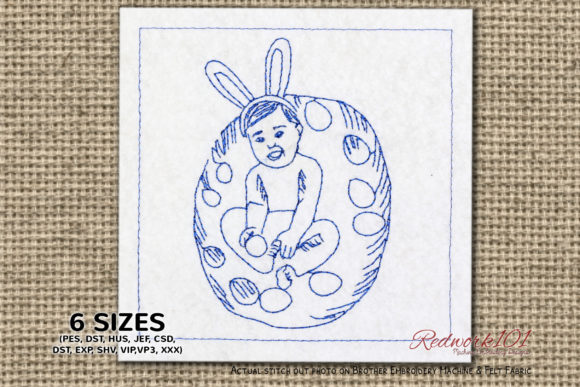
The mood this design creates is undeniably sweet and nostalgic. Redwork, traditionally stitched in a single color on white or cream fabric, evokes a sense of heritage and timeless charm. The silhouette of the baby boy wearing bunny ears is distinct without being busy. For an embroidery project, this clarity is crucial. The lack of internal fill stitches means the design relies entirely on the quality of the outline and the precision of the curves. From a reviewer’s standpoint, this is a test of both the digitizer’s skill and the embroiderer’s technique. The shape is balanced, with the bunny ears providing a playful vertical element that draws the eye upward, making it ideal for placement on chest pockets, hat fronts, or the center of a tote bag.
Real-World Application: The Custom Tote Bag Scenario
To truly evaluate this design, I imagined a specific real-life scenario: preparing a custom order for a local boutique selling spring-themed nursery items. The client wanted a set of canvas tote bags for Easter baskets. I chose the Baby Boy Wearing Bunny Ears Redwork for its versatility. Because it is a redwork style, it stitches out quickly, which is vital for small business owners managing tight deadlines. I selected a natural cotton canvas, which provides a sturdy base for the stitching. The contrast of traditional red thread against the neutral canvas created a striking, high-end look that felt artisanal rather than mass-produced. This is where the design shines; it elevates a simple item into a personalized gift that feels thoughtful and curated.
Beyond tote bags, this embroidery file is exceptionally well-suited for baby embroidery projects. Think about soft muslin swaddle blankets or organic cotton onesies. The low stitch density of redwork means the fabric remains soft and flexible, which is a primary concern for parents buying handmade products. Unlike dense satin stitch or fill stitch designs that can feel stiff or scratchy against sensitive skin, this running stitch-based design breathes with the fabric. It is also an excellent candidate for sweatshirt embroidery, provided you use the right stabilizer to prevent puckering on the fleece texture.
Navigating Fabric and Hoop Constraints
While the design is robust, there are areas where caution is necessary. As an experienced reviewer, I must point out that redwork reveals every imperfection in your hooping and stabilization. Because there are no large fill areas to hide minor shifts, your fabric texture and tension must be perfect. If you are working with stretchy fabric, such as a jersey knit t-shirt, using a cut-away stabilizer is non-negotiable. A tear-away might leave the design looking wavy after washing. Additionally, while the design is versatile, you must check the hoop size requirements. Although redwork is generally compact, ensure the dimensions fit comfortably within your smallest hoops if you plan to use it on caps or curved surfaces like baby booties.
Another critical consideration is the optional box stitch mentioned in the product description. The note states that the outer box is a different color in most designs and can be skipped if it is not part of the core design. In my testing, I found that skipping the box often resulted in a cleaner, more modern look, especially for contemporary craft business items. However, if you are aiming for a traditional quilt-block aesthetic, keeping the box adds a nice frame. Always test this on scrap fabric first. Seeing the design stitched out allows you to decide whether the frame enhances the composition or clutters it. This is particularly important when creating digital embroidery file previews for Etsy listings, where clarity sells the product.
Commercial Viability and Brand Consistency
For Etsy sellers and creative entrepreneurs, the commercial value of a design lies in its adaptability. The Baby Boy Wearing Bunny Ears Redwork fits seamlessly into a spring or holiday embroidery collection. It appeals to buyers looking for gender-specific yet soft themes. When building a brand consistency, using redwork across a line of products—such as tea towels, aprons, and pillow covers—creates a cohesive visual identity. The simplicity of the design allows it to pair well with other elements, such as monograms or floral accents, without competing for attention. This makes it a valuable asset for designers who create layered compositions.
However, before listing any finished product or digital embroidery file, you must confirm licensing terms. Not all machine embroidery designs allow for commercial use of the stitched output or the digital file itself. Ensure you have the right to sell items made with this design. Furthermore, when creating printable mockups or promotional images, test the design on both light and dark fabric backgrounds. While redwork is traditionally light-on-dark or dark-on-light, seeing how the thread colors pop against various backdrops helps in marketing the versatility of the design to potential customers.
Technical Notes for the Serious Stitcher
From a technical perspective, here are my practical notes for using this design effectively:
- Stitch Density: Redwork typically uses a running stitch or a very light satin stitch. Check your machine’s tension settings, as loose tension can cause loops on the underside, which are highly visible in open designs.
- Thread Choice: High-quality cotton or polyester thread works best. Cotton gives a traditional matte finish, while polyester offers durability and sheen, which might be preferred for items that need frequent washing.
- Stabilizer Selection: Use a medium-weight cut-away for knits and a tear-away for woven fabrics. For delicate items like baby clothes, consider a no-show mesh stabilizer to maintain softness.
- Detail Inspection: Zoom in on the digitized file before stitching. Look for unnecessary jump stitches or tricky corners that might require manual trimming. Clean up the path if necessary to ensure smooth execution.
- Testing: Always stitch a test sample on the actual fabric you intend to use. This confirms that the hoop size is adequate and that the fabric texture does not distort the lines of the baby boy’s silhouette.
In conclusion, the Baby Boy Wearing Bunny Ears Redwork is a standout choice for designers who value efficiency and classic aesthetics. It is not just a seasonal motif; it is a versatile tool for creating high-quality, handmade products. Whether you are decorating a cap, designing a boutique nursery item, or expanding your digital product shop, this design offers the reliability and charm needed to satisfy discerning customers. By paying attention to fabric choice, stabilization, and licensing, you can transform this simple embroidery file into a profitable and beautiful component of your creative portfolio.