Reviewing the Happy Independence Day Celebration Design
As a designer who has spent countless hours digitizing and testing patterns, I approach every new machine embroidery design with a mix of curiosity and caution. We have all been there: you see a festive graphic online, it looks crisp on the screen, but the reality on fabric can be surprisingly different. Today, I am taking a close look at the Happy Independence Day Celebration design to determine if it holds up under the needle for real-world projects. This is not just about aesthetics; it is about functionality, stitch quality, and how this piece will perform in a commercial or personal setting.
First Impressions and Visual Personality
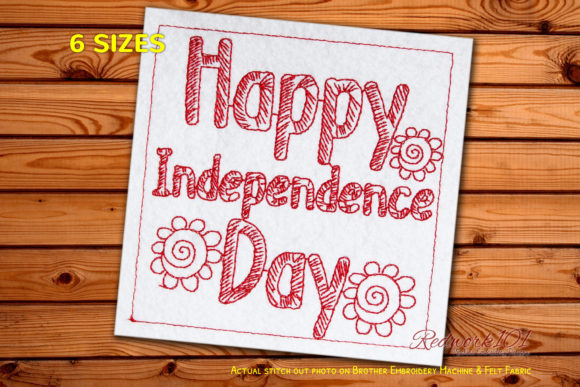
The immediate mood of the Happy Independence Day Celebration motif is one of joyful patriotism. It avoids the overly aggressive or militaristic themes sometimes found in holiday graphics, opting instead for a celebratory tone that feels welcoming. From a layout perspective, the balance between text and graphical elements appears thoughtful. For an embroidery project, this balance is critical. If the text is too small or the icons too dense, the machine will struggle to render them clearly, resulting in a muddy finished product.
The visual personality here suggests versatility. It does not scream "cheap souvenir." Instead, it has the clean lines necessary for a high-end handmade product. When I visualize this stitched out, I see it working well on items that require a touch of elegance alongside festivity. The design likely relies on a combination of satin stitch for borders and text, and fill stitch for larger graphical areas. This combination is standard for durability, but it requires careful attention to stitch density to prevent puckering, especially on lighter fabrics.
Real-World Application: The Tote Bag Test
To truly evaluate this design, I imagine applying it to a canvas tote bag design. This is a popular item for Etsy sellers and craft fair vendors during the summer months. Canvas is a sturdy fabric, which is forgiving for designs with higher stitch counts. However, the texture of the weave can interfere with fine details. If the Happy Independence Day Celebration pattern includes intricate running stitch details or very thin lettering, these might get lost in the grain of the canvas.
In this scenario, the design would serve as a central focal point. A customer buying a personalized tote for a Fourth of July picnic wants something that looks professional, not homemade in the negative sense. The clarity of the stars, stripes, or typographic elements in this design will determine whether the bag feels like a boutique item or a last-minute craft. If the thread colors are vibrant and the stitching is tight, the perceived value of the finished product increases significantly. This is where the design earns its keep: by elevating a simple bag into a memorable personalized gift.
Apparel and Curved Surfaces
Moving from flat surfaces to curved ones, let us consider sweatshirt embroidery or a structured cap. Here, the challenges multiply. A sweatshirt fleece is thick and plush. If the Happy Independence Day Celebration design has a high stitch density, it can create a stiff patch that feels uncomfortable against the skin or causes the garment to pull awkwardly. For apparel, I always recommend checking if the design has been optimized for stretchy or textured fabrics. Sometimes, a slight reduction in density or the use of a cut-away stabilizer is necessary to maintain shape without sacrificing comfort.
For caps, the curvature is the enemy of large, wide designs. If this pattern is wide, it may distort when hooped on a cap frame. Smaller, more compact versions of the design would work better here. An embroidered patch approach might be smarter for hats: stitch the design on a separate piece of twill, cut it out, and then applique it onto the cap. This allows for greater control over the final look and prevents the front panel of the hat from collapsing under the weight of the threads.
Navigating Fabric and Technical Constraints
One of the most important aspects of reviewing an embroidery file is understanding where it should not be used. While the Happy Independence Day Celebration design is versatile, it is not universal. Thin fabrics like silk or lightweight rayon shirts are risky. The tension required for satin stitches can pucker these materials permanently. If you plan to use this on delicate items, extensive testing on scrap fabric is non-negotiable. You must verify that the hoop size you intend to use accommodates the design without excessive re-hooping, which can lead to alignment errors.
Dark fabrics present another hurdle. If the design relies on light-colored threads for contrast, you must ensure that the underlying fabric color does not show through the stitches. This is particularly relevant for holiday embroidery where white or silver threads might be used against navy or black backgrounds. A proper underlay stitch is essential here, but since we are reviewing the design itself, we must assume the digitizer has included this. However, the buyer should always test a sample to confirm coverage.
Commercial Viability for Small Businesses
For craft business owners and small shop product creators, time is money. A design that runs smoothly without constant thread breaks or trimming saves labor hours. The Happy Independence Day Celebration pattern needs to be evaluated for its efficiency. Does it have excessive jump stitches? Are the color changes logical? These factors affect the production speed. Furthermore, for commercial embroidery, the uniqueness of the design matters. It should not look like a generic clipart conversion. The artistic integrity of the original graphic must translate well into thread.
When creating printable mockup images for your online store, this design offers strong visual appeal. Its patriotic theme is instantly recognizable, which helps with click-through rates on platforms like Etsy. However, remember that a mockup is not a guarantee. Always photograph a actual stitched sample. Customers trust transparency. Showing the texture of the fill stitch and the sheen of the thread builds confidence in your design assets and your skill as a maker.
Essential Designer Notes and Best Practices
Before you commit to producing a batch of items using the Happy Independence Day Celebration design, adhere to these practical steps:
- Test on Scrap Fabric: Never stitch directly on your final garment. Use the same type of fabric and stabilizer you plan to use for the final product.
- Check Thread Contrast: Ensure your chosen thread colors provide enough contrast against the fabric background, especially for small details.
- Verify Licensing: The product description notes that the Stitch Box is optional and colors may vary. Crucially, confirm the license terms. Can you sell finished items? Can you resell the digital embroidery file? Most designers allow selling finished physical goods but prohibit sharing the digital file. Respect intellectual property.
- Inspect Small Details: Zoom in on the preview. If there are tiny letters or intricate corners, consider if they will survive washing. Tiny details often unravel or merge after a few cycles.
- Use Proper Stabilizer: Match your stabilizer to your fabric. Cut-away for knits, tear-away for wovens, and wash-away for delicate or sheer fabrics.
In conclusion, the Happy Independence Day Celebration design offers a solid foundation for festive projects. Its success depends entirely on the executor's attention to detail, fabric choice, and machine setup. By treating it with the respect due to a professional applique design or complex motif, you can create stunning custom apparel and gifts that resonate with customers. Whether for a baby embroidery project on a onesie or a bold statement on a kitchen towel, this design has the potential to shine if handled with care and technical precision.