Review: Bass Fish Jumping in Water Quick Stitch Design
As a designer who spends more time staring at digitizing software than I do sleeping, I have learned to be skeptical of anything labeled "quick." Usually, that implies a lack of detail or a rushed job. However, when I loaded the Bass Fish Jumping in Water Quick Stitch into my previewer, my initial skepticism gave way to genuine appreciation for its strategic simplicity. This is not a design trying to be a photorealistic painting; it is a functional, stylish graphic meant for real-world application. For embroidery designers, Etsy sellers, and craft business owners, understanding the nuance between "simple" and "simplistic" is vital. This design lands firmly in the former category, offering a playful yet professional aesthetic that solves common production headaches.
The Visual Personality and First Impressions
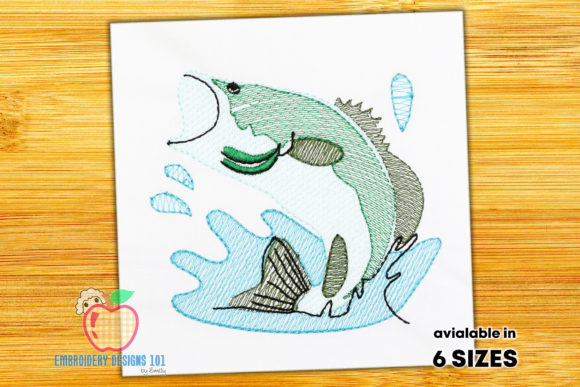
The first thing you notice about this embroidery file is its airy, open structure. The description notes that these are not 100% filled, meaning the fabric remains visible through the stitches. In the industry, we often call this a "sketch" or "open fill" style. This approach creates a lighter visual weight, which is crucial when working with textured fabrics like terry cloth towels or heavy canvas tote bags. A dense fill stitch design can sometimes look bulky or distort the material, but this bass fish design allows the substrate to breathe. The mood is energetic and fun, capturing the dynamic motion of a fish breaking the water’s surface without getting bogged down in unnecessary micro-details that might cause thread breaks or registration issues.
From a layout perspective, the silhouette is clean. It does not rely on tiny, fragile elements that are prone to snagging during wear and washing. This makes it an excellent candidate for items that will see heavy use, such as aprons, work shirts, or outdoor gear. The visual personality suggests a love for nature, fishing, and lake life, making it a natural fit for niche markets ranging from Father’s Day gifts to boutique fishing lodge merchandise.
Real-World Application: The Tote Bag Test
To truly evaluate a design, you must imagine it on a finished product. Let’s consider a common scenario for a small shop owner: creating a line of reusable market totes. I recently simulated this project using the Bass Fish Jumping in Water Quick Stitch on a natural cotton canvas. Because the design utilizes an open stitch structure, it did not create a stiff, cardboard-like patch on the flexible fabric. Instead, it moved with the bag. The visibility of the fabric through the stitches added a rustic, handmade charm that customers often seek in artisanal goods.
This adaptability extends to other popular items. Imagine this design on a heather grey sweatshirt. A solid, dense fish might look too harsh against the soft, melange texture of the fleece. Here, the open stitching complements the fabric’s texture. For baby embroidery projects, such as a hooded towel or a onesie, the reduced stitch count means less bulk against sensitive skin, enhancing comfort while still delivering a cute, recognizable graphic. Whether you are creating a personalized gift for a fishing enthusiast or stocking your Etsy shop with seasonal apparel, this design offers versatility that dense, complex artworks often lack.
Technical Performance and Stitching Clarity
One of the biggest advantages of this type of machine embroidery design is its forgiving nature regarding stitch density. High-density designs require perfect tension and high-quality stabilizer to prevent puckering. While you should always use appropriate stabilizer, this open design is far more tolerant of minor tension fluctuations. The use of what appears to be a combination of running stitches and sparse fills ensures that the design stitches out quickly, saving you valuable machine time. For commercial embroidery operations where time is money, this efficiency is a significant benefit.
However, clarity is key. Because the design is not fully filled, thread color choice becomes critical. I recommend testing high-contrast thread colors against your fabric. For example, a navy blue thread on a white towel pops beautifully, defining the shape of the bass clearly. Conversely, using a low-contrast color might make the design look muddy or indistinct from a distance. Always test your thread colors on scrap fabric before committing to a final product. This is especially true for dark fabrics; if you are stitching on a black cap, you may need to adjust the underlay or choose brighter thread colors to ensure the fish doesn't disappear into the background.
Where to Use Caution
While versatile, this design is not without its limitations. Designers must be mindful of hoop size and placement. If you are attempting to scale this design down significantly for a small pocket logo or a tiny embroidered patch, the open spaces between stitches might become too large, causing the image to lose its coherence. It needs enough surface area to define the shape of the fish and the splash. Similarly, on highly stretchy fabrics like spandex or thin jersey knits, even an open design can cause distortion if not stabilized correctly. Always use a cut-away stabilizer for stretchy garments to maintain the integrity of the design over time.
Another consideration is curved surfaces, such as baseball caps. The dynamic, horizontal spread of the jumping fish needs a relatively flat plane to look correct. Placing it on the side panel of a cap might work, but placing it on the front panel could result in warping due to the curvature. Always mock up your design digitally or physically on the specific garment type before full production.
Enhancing Brand Value and Customer Trust
For handmade shop owners and creative entrepreneurs, the quality of your digital embroidery files directly impacts your brand reputation. Using a well-digitized, clean design like Bass Fish Jumping in Water Quick Stitch signals professionalism. It shows that you care about the durability and aesthetic of your finished product. Customers are increasingly educated; they can spot poor digitizing, such as excessive jump stitches or poorly defined edges. This design avoids those pitfalls, offering a polished look that enhances buyer engagement and trust.
Furthermore, the "quick stitch" nature of the design allows for competitive pricing. Since it consumes less thread and machine time, you can offer personalized items at a more accessible price point without sacrificing profit margins. This is particularly useful for holiday embroidery rushes or wedding gifts where volume is high. It allows you to produce high-quality, custom apparel and accessories efficiently, keeping your customers happy and your workflow manageable.
Practical Designer Notes for Best Results
Before you begin your next embroidery project with this asset, keep these practical tips in mind:
- Test on Scrap Fabric: Always run a test stitch-out on the same type of fabric you intend to use for the final product. Check for puckering and thread breaks.
- Check Thread Contrast: Ensure your thread color stands out against the fabric. Use a black-and-white mockup to verify that the shape is recognizable without color cues.
- Verify Licensing: If you plan to sell finished items or use this in commercial embroidery projects, confirm the license terms provided with the digital embroidery file. Most designers allow sales of physical items but restrict the resale of the file itself.
- Stabilizer Selection: Match your stabilizer to your fabric. Use tear-away for stable woven fabrics like towels and cut-away for knits like sweatshirts.
- Inspect Small Details: Zoom in on your preview software. Ensure there are no unnecessary jump stitches that could clutter the back of your work, especially if the item will be worn directly against the skin.
In conclusion, the Bass Fish Jumping in Water Quick Stitch is a thoughtful addition to any designer’s library. It balances aesthetic appeal with production efficiency, making it a reliable choice for everything from boutique branding to personalized family gifts. By understanding its strengths and limitations, you can leverage this design to create high-quality, profitable embroidery products that resonate with your audience.