Bunch of Tulip Flowers Blooming Redwork Review
As an embroidery designer who has spent years digitizing and testing patterns for commercial use, I approach every new machine embroidery design with a critical eye. It is not just about whether the image looks pretty on a screen; it is about how that design translates to fabric, how it holds up in production, and ultimately, how it serves the brand identity of the small business using it. Today, I am reviewing the Bunch of Tulip Flowers Blooming Redwork, a piece from the Bouquets category that promises a classic aesthetic for modern merchandise.
First Impressions: A Classic Redwork Appeal
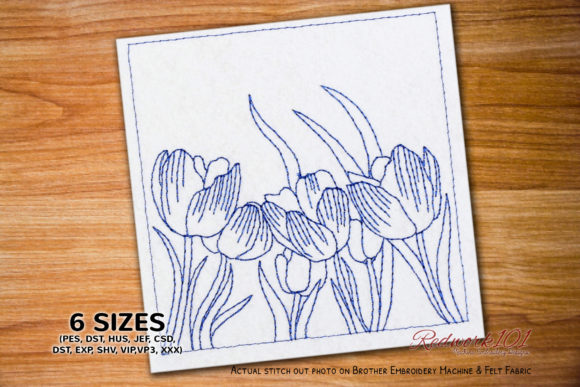
The immediate visual impact of the Bunch of Tulip Flowers Blooming Redwork is one of understated elegance. Redwork is a traditional style that relies on single-color stitching, usually red, to create outline-based imagery. This specific design features a bunch of tulips blooming in the morning light, capturing a sense of freshness and organic growth. For a designer, this simplicity is both a blessing and a challenge. It feels handmade, rustic, and approachable, which aligns perfectly with current trends in boutique branding.
Unlike complex, multi-colored digital files that can look cluttered when scaled down, this design relies on clean lines. The "morning" aspect suggested in the description implies a softness, but since it is redwork, the boldness comes from the contrast between the thread and the fabric. It does not scream for attention; rather, it invites a closer look. This makes it an excellent candidate for brands that want to project professionalism without appearing corporate or cold. It feels decorative yet functional, striking a balance that is rare in stock embroidery file libraries.
Real-World Business Applications
When I evaluate a design for small business merch, I ask: where does this live? The Bunch of Tulip Flowers Blooming Redwork is versatile, but it shines brightest in specific applications. Here is how I see it performing in a commercial setting:
- Branded Patches: This is perhaps the strongest use case. An embroidered patch with this tulip motif can be sewn onto denim jackets, canvas totes, or aprons. Because redwork uses minimal thread coverage, the patch remains flexible and lightweight, avoiding the stiff, cardboard-like feel of high-density fills.
- Apron Embroidery: For bakeries, florists, or cafes, staff uniforms are walking billboards. Placing this bouquet on the chest pocket of a linen or cotton apron adds a touch of artisanal charm. It signals to customers that the business values craftsmanship and natural beauty.
- Tote Bag Design: Canvas tote bags are a staple for retail shops. The simple outlines of the tulips stitch cleanly on textured canvas fabric. It works well as a central focal point or as a repeating pattern if the license allows for scaling and manipulation.
- Cap Embroidery: While possible, cap fronts require careful sizing. The vertical nature of tulips fits well within the standard curved hoop area, but the design must be scaled correctly to avoid distortion on the stiff buckram of a baseball cap.
For Etsy sellers and handmade product creators, this design can elevate a simple item into a premium gift. Imagine a set of kitchen towels or a reusable produce bag featuring this bloom. It transforms a commodity into a handmade product with perceived higher value.
Technical Considerations for Production
While the aesthetic is appealing, the technical execution determines the quality of the finished product. As a designer, I have several notes for anyone planning to use this in commercial embroidery.
First, consider the stitch density. Redwork designs typically have lower density than fill-stitch designs. This is advantageous for speed and cost, but it means the fabric underneath will show through. On dark uniforms or black apparel, you cannot simply use red thread. You would need to switch the thread color to white, cream, or a brand-specific color to ensure visibility. Always test your thread colors against your base fabric before running a full production batch.
Second, pay attention to the hoop size and stabilizer. Since the description notes that the outer box shown in pictures is optional and may vary in color, you must confirm the actual dimensions of the tulip bunch itself. If the design is large, it may require a 5x7 or 6x10 hoop. For smaller applications like left-chest logos, ensure the details do not become too fine. Fine outlines can break or get lost if the needle size is too large or if the stabilizer is not appropriate for the fabric texture.
I recommend testing this design on the exact material you plan to use. A smooth cotton behaves differently than a textured linen or a stretchy polo shirt. Use a cut-away stabilizer for garments that will be washed frequently, such as staff t-shirts, to prevent puckering over time. For woven items like tote bags, a tear-away might suffice, but always prioritize stability to maintain the crispness of the tulip outlines.
Brand Identity and Customer Trust
Why choose this specific design over a generic clipart flower? Consistency. When you use a high-quality digital embroidery file like the Bunch of Tulip Flowers Blooming Redwork, you are investing in your brand identity. Customers associate clean, professional embroidery with trustworthiness. A sloppy or pixelated logo suggests a lack of care, whereas a crisp, well-digitized tulip bouquet suggests attention to detail.
This design supports visual consistency across various design assets. It can be used on your custom apparel, your packaging inserts, and even your social media printable mockup images. When a customer sees the same elegant tulip motif on their receipt, their tote bag, and your website, it reinforces brand recognition. It tells a story of growth, nature, and care—values that resonate deeply with consumers of boutique goods.
Where to Use Caution
Despite its strengths, this design is not a one-size-fits-all solution. Avoid using it on items that require extreme durability in high-friction areas, such as the knees of work pants, unless reinforced properly. Also, be cautious with very small patch sizes. If you shrink the design too much, the individual petals of the tulips may merge, losing the definition that makes redwork attractive. Always check the minimum recommended size provided by the digitizer.
Additionally, remember that the description mentions the Stitch Box is optional. Ensure you understand what elements are included in the file you purchase. If the box is part of the design, it adds a frame that might constrain placement options. If it is separate, you have more flexibility but need to manage alignment carefully during hooping.
Final Verdict for Small Business Owners
The Bunch of Tulip Flowers Blooming Redwork is a strong contender for small business owners looking to add a touch of organic elegance to their merchandise. It is particularly well-suited for florists, bakeries, bridal boutiques, and eco-friendly brands. Its simplicity allows for quick production times, keeping costs down while maintaining a high-end look.
Before you begin mass production, take these steps:
- Verify the commercial licensing terms of the embroidery file to ensure it covers your intended use volume.
- Request or download a printable mockup to visualize the scale on your specific products.
- Run a test stitch-out on your actual inventory fabric using your preferred stabilizer.
- Compare the stitched result beside your other brand identity elements to ensure color and style harmony.
In the world of small business merch, details matter. This design offers a blend of traditional charm and modern versatility that can help your brand stand out. By treating it with the technical respect it deserves—proper hooping, stabilizing, and thread selection—you can turn a simple bunch of tulips into a powerful tool for customer engagement and brand loyalty.